6 moves for leading a team through a restructuring: the listening session, the 3 kinds of answers, what to hand people in place of certainty, and 4 books on leading through change.
Every Friday our design team ends the week with a cool-down. It’s the bookend to our Monday warm-up: wins from the week, work in progress, music, the occasional bit of nonsense everyone needs by Friday. But some weeks the ground moves: an org chart changes faster than the plan underneath it, work changes hands, and people everyone leaned on are suddenly working out what comes next. In those weeks we scrap the fun. Same meeting, same hour, same faces, but I open the floor to questions instead, because by then I’ve usually spent the week with our design leaders and heard almost nothing from the designers doing the work.
I’m writing down what I’ve learned to do with that hour, and with the conversations around it, because the clearest signal I’ve heard from every function in those weeks is some version of “we don’t hear enough from our leaders.” The change itself is usually decided above most of us, but the silence around a change is a choice, and it’s the more expensive one.
Any question is fair, including the uncomfortable ones. Some I can’t answer today, either because I don’t know yet or because it isn’t mine to share. Those I carry up, and I come back with what I hear.
-
Keep the container, change the agenda. The instinct in a hard week is to call a special meeting, and I think that instinct is backwards: a new invite on the calendar reads as one more change in a week already full of them. We kept the standing Friday ritual and swapped the agenda inside it, because the ritual surviving the week is its own message that some things hold. I collected questions ahead of time and answered the 2 hardest first, before anyone had to raise a hand, since the person brave enough to ask “is more change coming?” in front of everyone shouldn’t have to be the one who asks it. And I didn’t build the hour alone: the night before, I sent our people partner what I planned to cover, and she gave me good edits on what to carry and what to hold.
-
Give every question 1 of 3 answers. I set the policy at the top of the hour: every question is fair, including the uncomfortable ones. Some I would answer on the spot. The rest I sorted, in front of the room, into “I don’t know yet” or “that isn’t mine to share,” because those 2 ask different things of a team: the first asks for their patience, and the second asks for their trust. Both kinds got the same follow-up: I wrote them down, carried them into the leadership conversations that followed, and brought back what I heard. An unanswered question with an owner and a return date is information the team can work with, while an unanswered question that just evaporates is how a team learns to stop asking.
-
Trade false certainty for your reasoning. The first pre-submitted question was the one you’d expect: is more change coming? I can’t promise that it isn’t, so I didn’t. What I said was that I don’t think so, and then I spent my time on the reasoning I could share, because people can stress-test reasoning and hold you to it later, while “everything will be fine” gives them nothing to hold at all. My own format for a change update is 2 lists: here’s what we know is locked, and here’s what’s still in motion. Some leaders hold the maybes back in case they change, and I understand the caution, but I’d rather share a maybe and apologize later if it moves, because the apology costs me less than the silence costs the team.
-
Answer the question behind the question. Someone asked, carefully, why the changes landed before the plan for absorbing them. I answered the blunter version they were too polite to ask: what are we doing making changes without a plan? Then I conceded what was true in it, which is that I haven’t seen the full plan either, though I believe more of one exists above us than has reached us. And then I gave the rationale I actually believe: moving first is a signal about ownership, that the teams inheriting this work are trusted to run it rather than wait for a perfect handoff. The trust in the room came less from my answer and more from my willingness to repeat their suspicion back more bluntly than they had put it.
-
Join the dismay before you redirect it. Midway through, one of our designers said they didn’t have a productive question, just dismay to express. The worst thing I could have done was fix that. I told them to say it louder for everyone in the back, because I feel the same dismay, and some of the same dread about losing people we didn’t choose to lose. Only after that did we get to the part a team can control. While the connective tissue is thin, the work has to be shared more loudly than feels natural, so nothing slips between teams and the quality bar stays where we set it. And the people who are leaving should hear specific thanks for specific work while they’re still here to hear it.
-
If the change moves work onto people, it owes them a curriculum. A restructuring that redistributes work is a bet that the people who remain have the bandwidth and the skills to carry it. A colleague once put that test to me plainly: for this to work, 2 things have to be true. People need the bandwidth to take on the work, and they need the skills to do it. If either is missing, the new structure runs on burnout, however clean the chart looks. So the ask I’m carrying into our planning is a curriculum: benchmark the skills each team actually has in its area, then build the training that closes the gap, so the people being asked to stretch stay valuable and the work stays good. (I can speak for myself here: I don’t have the skills to project manage, and I gladly admit I don’t have the patience for it either.)
I ended the hour where I wanted the weekend to start. The people leaving were taken care of, they’re going to land well, and the kindest thing the rest of us can do over the next month is make their last stretch lighter. Then I wrote down every question I owed an answer to, because the follow-through on those is the one part of a week like this that’s entirely mine to control.
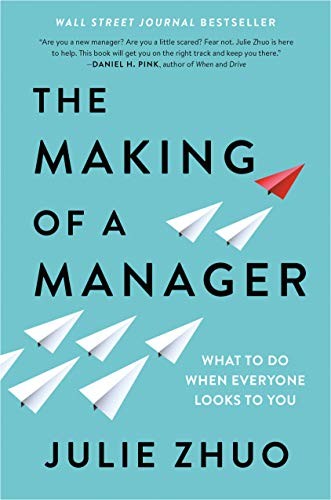
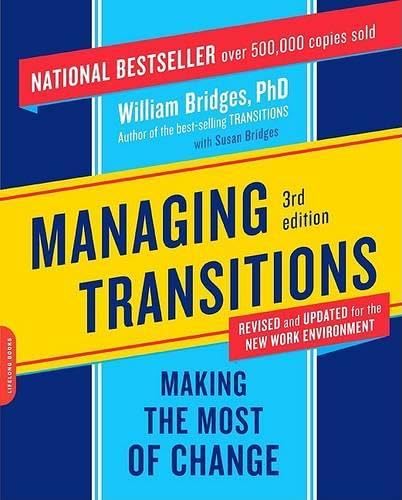
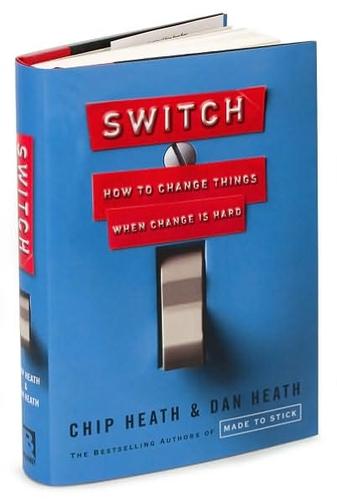
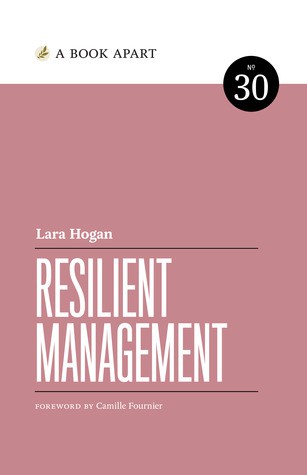
Four books on leading a team through change.
The shelf